






Featured Post
The Future of Smart Furniture: Revolutionizing Modern Homes
Overview: A New Era for Home Furnishings
The future of smart furniture is here, blending cutting-edge technology with innovative furniture designs for modern homes. From sofas that adjust to your posture to tables that charge your devices, smart furniture is redefining comfort and functionality. This article explores how these advancements are shaping living spaces and what to expect next.
What Is Smart Furniture?
Smart furniture integrates technology to enhance usability, comfort, and efficiency. Unlike traditional furniture, these pieces connect to apps, adapt to user needs, or offer multifunctional features. Think of a sofa that doubles as a speaker system or a bed that tracks your sleep patterns. The goal? To make homes more intuitive and responsive.
The concept isn’t entirely new—think of recliners with built-in massage functions—but today’s smart furniture takes it further. According to a 2023 study by the International Furniture Manufacturers Association, the global smart furniture market is projected to grow by 20% annually through 2030, driven by demand for connected home solutions.
Why Smart Furniture Matters
Modern homes are evolving. Smaller living spaces, remote work, and a focus on sustainability are pushing furniture makers to innovate. Smart furniture addresses these needs by offering space-saving designs, eco-friendly materials, and seamless tech integration. For example, a desk that adjusts its height based on your posture can boost productivity and health.
I’ve seen this firsthand. A friend recently swapped her bulky coffee table for a sleek, smart version with wireless charging and hidden storage. It transformed her small apartment, making it feel bigger and more organized. This kind of adaptability is why smart furniture is a game-changer.
Innovative Furniture Designs for Modern Homes
The future of smart furniture lies in its ability to blend form and function. Here are some standout trends:
- Multifunctional Pieces: Sofas that convert into beds or desks that fold into walls are perfect for small spaces.
- Sustainable Materials: Bamboo, recycled plastics, and low-impact fabrics are becoming standard, as noted in a report by the Sustainable Furnishings Council.
- Voice and App Control: Imagine telling your sofa to recline or dim its built-in lights via your phone.
- Health-Focused Features: Beds that monitor heart rate or chairs that correct posture are gaining traction.
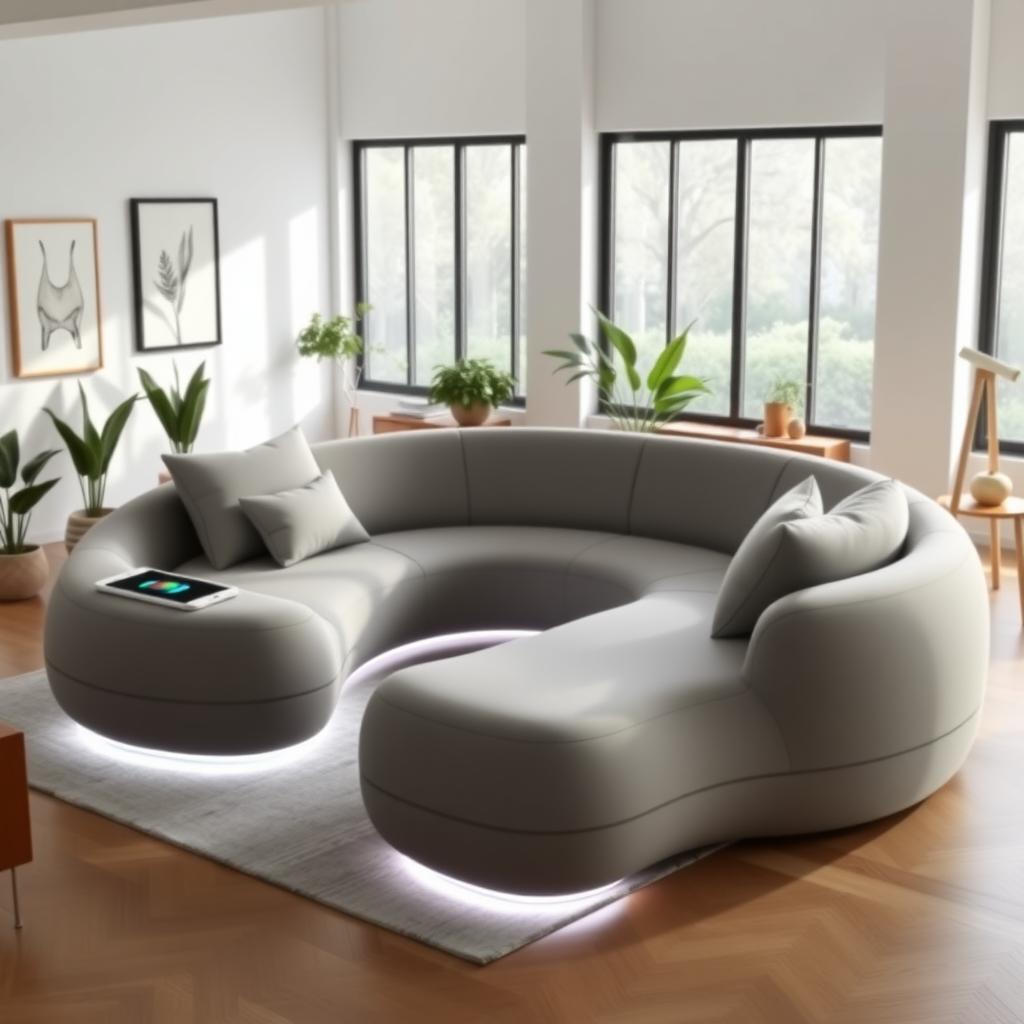
These designs aren’t just practical—they’re stylish. Unique sofa shapes and designs, like modular or asymmetrical forms, add personality to homes while solving real-world problems.
The Rise of Unique Sofa Shapes and Designs
Sofas are no longer just places to sit. Today’s smart sofas come in bold, unconventional shapes—think curved silhouettes or modular sections that rearrange like puzzle pieces. These designs maximize space and adapt to different needs, whether you’re hosting a party or working from home.
For instance, a colleague recently bought a modular sofa with built-in USB ports and a cooling system. It’s not just a sofa; it’s a hub for her living room. According to Furniture Today, sales of modular sofas rose 15% in 2024, reflecting their growing popularity.
Here’s a quick look at popular smart sofa features:
| Feature | Benefit |
|---|---|
| Modular Design | Rearrange sections for different layouts |
| Built-in Tech | USB ports, speakers, or charging pads |
| Smart Fabrics | Stain-resistant or temperature-regulating materials |
| Voice Control | Adjust settings hands-free |

Benefits of Smart Furniture
Why invest in smart furniture? Here are the key advantages:
- Space Optimization: In my own small apartment, a smart storage ottoman doubled my living room’s functionality by hiding blankets and books.
- Enhanced Comfort: Features like adjustable lumbar support or heated seats make relaxation effortless.
- Energy Efficiency: Many smart furniture pieces, like LED-lit tables, use low-energy tech, reducing your carbon footprint.
- Personalization: Apps let you customize settings, from lighting to seat firmness, for a tailored experience.
A study by MIT’s Design Lab found that homes with smart furniture reported a 30% increase in user satisfaction due to improved functionality and aesthetics.
Challenges to Consider
Smart furniture isn’t perfect. High costs can be a barrier—basic smart sofas start at $1,500, while advanced models can exceed $5,000. Connectivity issues, like app glitches or Wi-Fi dependency, can also frustrate users. Plus, the tech can become outdated, requiring upgrades.
I’ve experienced this myself. My smart lamp stopped syncing with its app after a software update, leaving me with a pricey, non-smart lamp. Still, manufacturers are addressing these issues with better software and modular upgrades.

How to Choose Smart Furniture
Ready to upgrade your home? Here’s how to pick the right pieces:
- Assess Your Needs: Do you need a sofa for small spaces or a desk for remote work?
- Check Compatibility: Ensure the furniture works with your devices or smart home systems like Alexa or Google Home.
- Prioritize Quality: Look for durable materials and reputable brands.
- Test Features: If possible, try the furniture in-store to ensure comfort and functionality.
I recommend starting small. A smart coffee table or ottoman can introduce you to the technology without breaking the bank.
The Future of Smart Furniture
What’s next? Expect even smarter integrations. Furniture that learns your habits—like a chair that adjusts based on your sitting patterns—is already in development. Augmented reality (AR) could let you preview furniture in your home before buying. Plus, eco-friendly innovations, like solar-powered charging stations, are on the horizon.
The future of smart furniture is about creating homes that are not just beautiful but intuitive. As technology advances, the line between furniture and tech will blur, making our living spaces more connected than ever.
Summary
The future of smart furniture is transforming how we live, offering innovative furniture designs for modern homes. From unique sofa shapes and designs to multifunctional tables, these pieces blend style, tech, and sustainability. While challenges like cost and connectivity exist, the benefits—space savings, comfort, and personalization—are undeniable. As smart furniture evolves, it promises to make homes more functional and inviting.