


Featured Post
Sideboard Organization Tips and Tricks for a Clutter-Free Home
Overview
A sideboard is more than just a piece of furniture—it’s a functional centerpiece that can transform your living space. Whether in your dining room, living room, or hallway, sideboards offer ample storage and display opportunities. These sideboard organization tips and tricks will help you make the most of this versatile piece, keeping your home stylish and clutter-free.
Why Sideboard Organization Matters
I’ve always loved how a sideboard can tie a room together. It’s like the Swiss Army knife of furniture—part storage, part display, and all style. But without proper organization, it can quickly become a dumping ground for odds and ends. A well-organized sideboard not only maximizes space but also elevates your home’s aesthetic. By keeping items neatly arranged, you create a welcoming environment that feels both functional and beautiful.
Organizing a sideboard isn’t just about tidiness. It’s about creating a system that works for your lifestyle. Whether you’re storing dinnerware, linens, or electronics, the right approach saves time and reduces stress. Let’s dive into practical tips to make your sideboard both practical and visually appealing.
Declutter Before You Organize
The first step in any sideboard organization project is decluttering. I learned this the hard way when I once tried to “organize” a sideboard overflowing with old magazines, mismatched coasters, and forgotten cables. Start by emptying your sideboard completely. Lay everything out and sort items into three piles: keep, donate, and toss.
Ask yourself: Do I use this regularly? Does it belong here? For example, keep dining essentials like napkins or serving trays, but relocate unrelated items like kids’ toys or paperwork. According to a study by the National Association of Professional Organizers, decluttering can reduce household stress by up to 40%. A clean slate makes it easier to create a system that works.
Categorize and Group Items
Once you’ve decluttered, group similar items together. I like to think of my sideboard as having “zones” based on function. For instance, one drawer might hold table linens, while another stores candles and matches. Use these categories to guide your organization: - Dining Essentials: Plates, napkins, placemats, and serving utensils. - Entertaining Supplies: Glassware, coasters, or cocktail tools. - Decorative Items: Vases, picture frames, or seasonal decor. - Miscellaneous: Cables, batteries, or small tools (if necessary).
This approach keeps everything intuitive. When I host dinner parties, I know exactly where to find my serving platters without digging through a mess. Consider your daily needs and prioritize easy access for frequently used items.
Use Storage Solutions
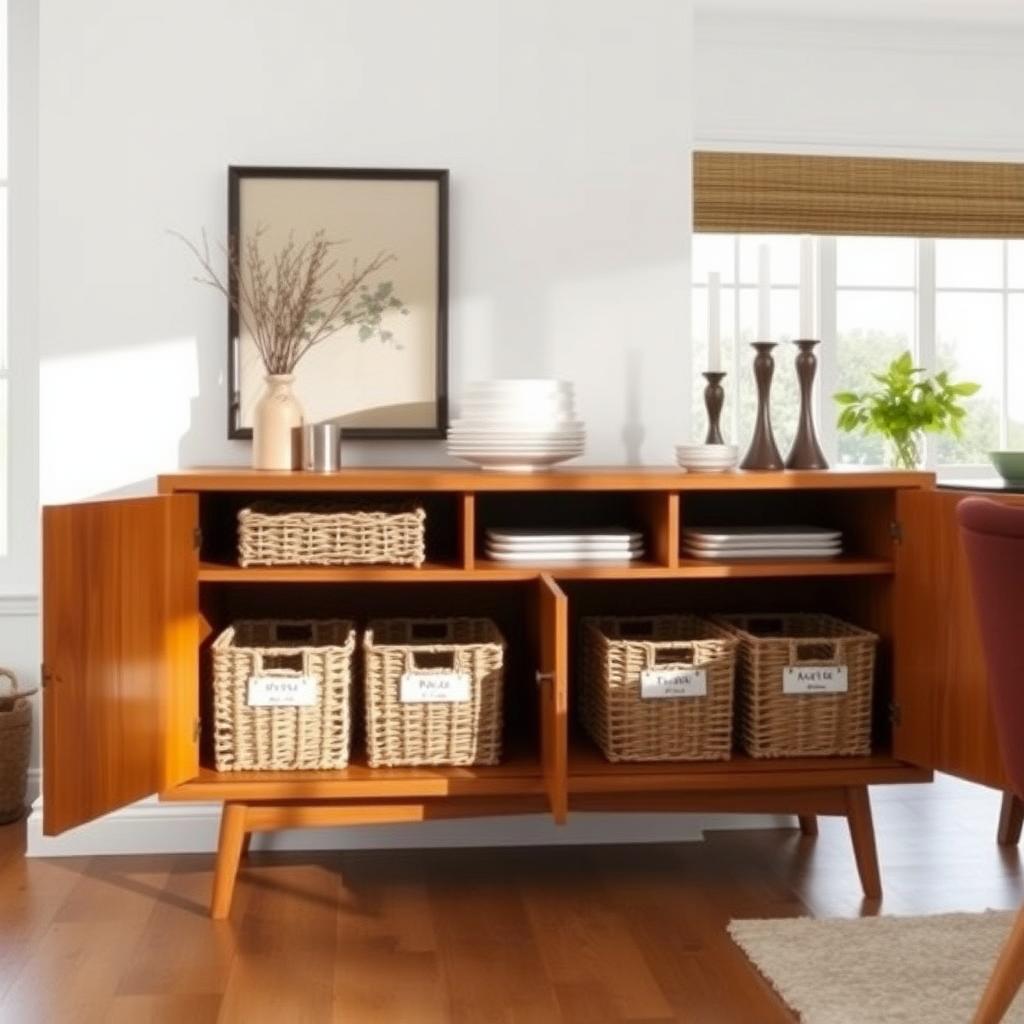
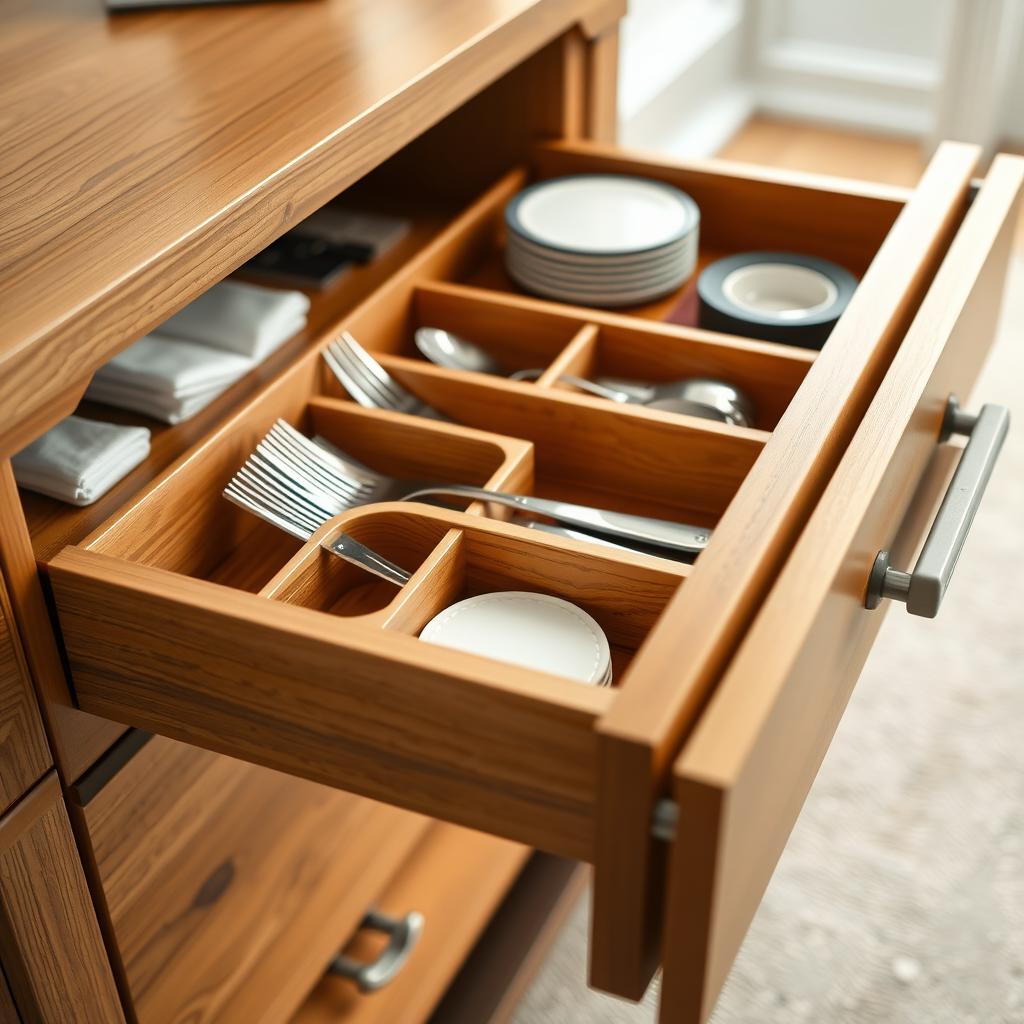
To maximize space, invest in storage tools like baskets, dividers, or trays. I swear by small wicker baskets for corralling napkins or silverware—they add texture while keeping things tidy. Drawer dividers are perfect for separating utensils or small items like coasters. For deeper cabinets, use pull-out organizers to access items at the back without rearranging everything.
Here’s a quick table of storage solutions for your sideboard:
| Storage Tool | Best For | Where to Find |
|---|---|---|
| Wicker Baskets | Linens, small decor | Local home stores or Amazon |
| Drawer Dividers | Utensils, small items | The Container Store |
| Pull-Out Shelves | Deep cabinets | Hardware stores or IKEA |
These tools make a huge difference in keeping your sideboard organized and accessible.
Style the Top of Your Sideboard
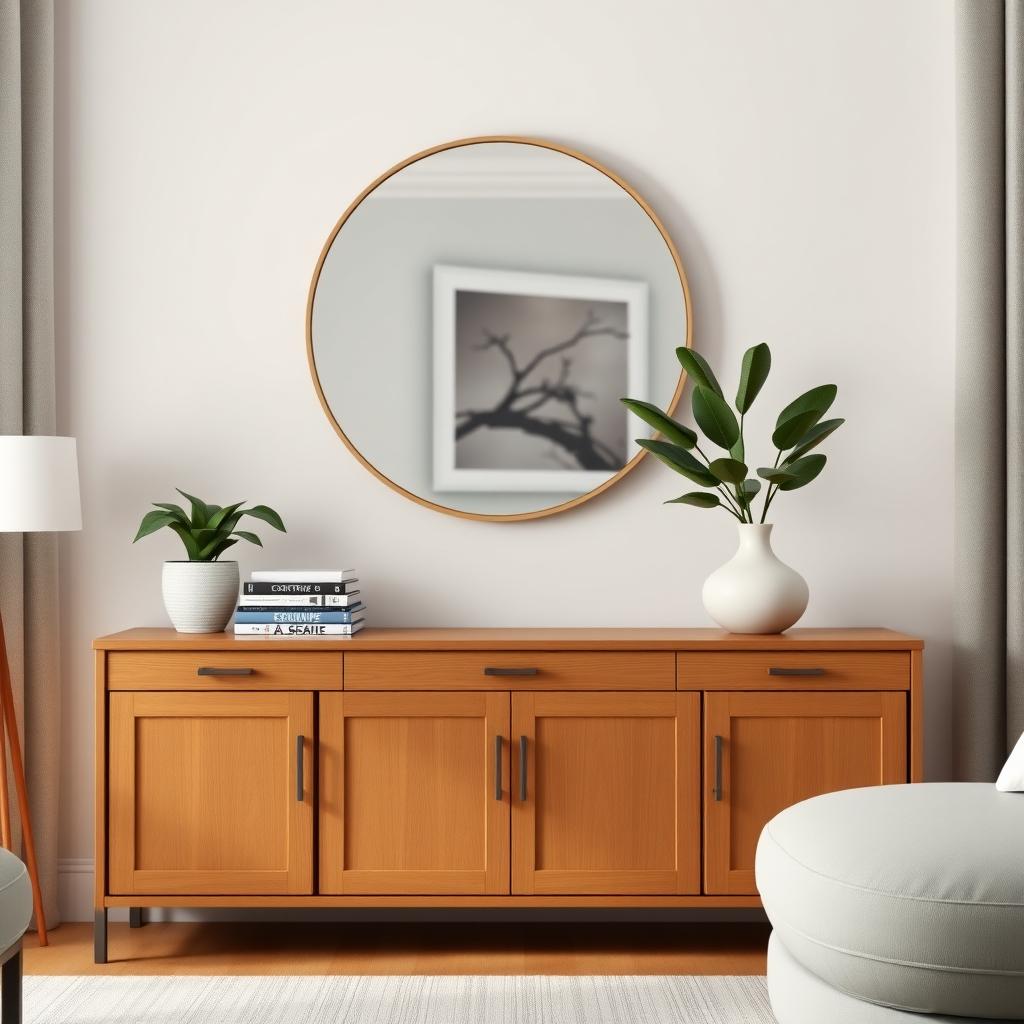
The top of your sideboard is prime real estate for showcasing your personality. But it’s easy to go overboard and end up with clutter. I stick to a simple formula: one statement piece (like a vase or lamp), a stack of books or trays for height, and a small decorative item like a candle or plant.
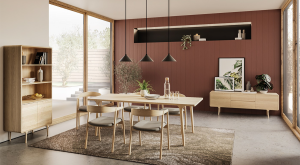
Keep it balanced. If your sideboard is in a dining room, a runner with a centerpiece can tie it to the table’s style. In a living room, a mirror above the sideboard can make the space feel larger. Rotate seasonal items—like pumpkins in fall or greenery in spring—to keep the look fresh without overcrowding.
Maintain Accessibility
One mistake I made early on was packing my sideboard so tightly that I couldn’t reach anything without a struggle. Now, I make sure frequently used items are front and center. For example, I keep everyday plates in an open shelf and store rarely used serving bowls in harder-to-reach spots. If you have kids, place fragile items on higher shelves or behind closed doors.
Labeling can also help. I use small, discreet labels on baskets to remind everyone where things go. This is especially useful if you share your home with others who might not follow your system. Clear containers are another great option for seeing contents at a glance.
Regular Maintenance
A sideboard can slip back into chaos if you’re not careful. I set aside 10 minutes every month to tidy mine up. Check for items that don’t belong, wipe down surfaces, and rearrange anything that’s gotten messy. This small habit keeps your sideboard functional and beautiful year-round.
If you’re short on time, do a quick scan before hosting guests. A tidy sideboard makes a great impression and sets the tone for a welcoming space. Plus, it’s one less thing to stress about when you’re busy preparing.
Adapting to Your Space
Every sideboard is different, so tailor your approach to its size and style. A narrow sideboard in a hallway might focus on decor with minimal storage, while a large dining room sideboard can handle bulkier items. I once had a tiny sideboard in my apartment that doubled as a bar—stackable bins were a lifesaver for fitting everything.
If your sideboard has open shelves, use baskets to hide less attractive items. For glass-fronted cabinets, arrange items thoughtfully to maintain a polished look. The goal is to make your sideboard work for you, no matter its size or location.
Summary
With these sideboard organization tips and tricks, you can turn your furniture into a functional and stylish asset. Start by decluttering, categorize items, and use smart storage solutions. Style the top thoughtfully, keep items accessible, and maintain your system regularly. A well-organized sideboard not only saves space but also enhances your home’s charm.